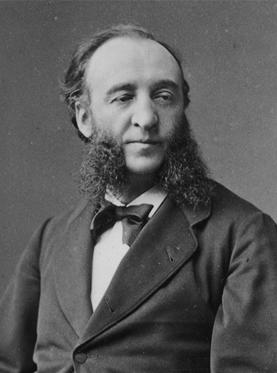
Jules Ferry(1832 — 1893)
Jules Ferry
France
8 min read
French statesman (1832–1893) who transformed French education as Minister of Public Instruction. He is responsible for the landmark education laws making primary school free, secular, and compulsory, laying the foundations of the modern French public school system.
Frequently asked questions
Famous Quotes
« He who controls the school controls society. »
« The budget for public education is the most fruitful of all investments. »
Key Facts
- 1879–1885: Minister of Public Instruction, period of major educational reforms
- 1881: Jules Ferry Law making primary education free
- 1882: Jules Ferry Law making primary education compulsory and secular
- 1884: Abolition of religious instruction in public schools
- 1885–1889: President of the Council (head of government)
Works & Achievements
This law abolished tuition fees in all French public primary schools, allowing children from poor families to access education. It was the first of Ferry's three major school reform laws.
This law made education compulsory for all children aged 6 to 13 and removed religious instruction from public school curricula. Crucifixes were taken down from classrooms and replaced with republican symbols.
An extension of the 1881–1882 laws, it required all teaching staff in public schools to be secular, gradually excluding religious congregations. It completed the framework of the republican school.
A foundational circular in which Ferry defined the moral mission of schoolteachers: to impart a universal secular morality, with no religious reference. This text remains a landmark of French republican educational philosophy.
A multi-volume collection of his major parliamentary speeches and political writings. Essential for understanding his views on education, secularism, colonialism, and the Republic.
Ferry organized and expanded teacher training schools to form an army of secular schoolteachers, nicknamed 'the black hussars of the Republic'. This infrastructure trained the teachers of French public schools for decades.
Anecdotes
Jules Ferry was nicknamed 'Ferry-Famine' by Parisians during the Siege of Paris in 1870-1871: as mayor of the capital, he was responsible for managing the meager food rations distributed to the starving population. This unfair nickname stuck with him, but Ferry continued to carry out his duties with rigor despite popular hostility.
When Jules Ferry had crucifixes removed from classrooms and religious figures expelled from public schools, he received thousands of insulting letters and was even threatened with death. Unperturbed, he declared that secularism was not a war against religion but a guarantee of freedom for all children of France, regardless of their faith.
Ferry was passionate about literature and deeply admired Auguste Comte, the father of positivism. He applied positivist philosophy directly to his education policy: schools were to be grounded in reason and science, not faith or tradition. His opponents ironically dubbed him 'the positivist', but he wore the label with pride.
In 1884, while serving as President of the Council, Jules Ferry faced a fierce parliamentary campaign led by Georges Clemenceau following military setbacks in Tonkin. Ousted by the Chamber amid jeers, Ferry left power in disgrace. Yet a few years later, his education laws were hailed as the foundation of the modern Republic.
Jules Ferry died in 1893, leaving as his final wish that his ashes be buried facing Alsace-Lorraine, the provinces lost in 1871 after the defeat against Prussia. This symbolic gesture illustrated his visceral attachment to his homeland and his conviction that republican schools would shape the generations who would return those territories to France.
Primary Sources
Modern society must make up its mind to choose: it must choose between the Church, which holds it through the rising generations, and the school, which alone can regenerate it.
You are the assistants and, in a sense, the substitutes of the head of the family; speak to the child as you would wish someone to speak to your own; with kindness, with gravity, with severity if need be, but above all with that deep conviction that you are performing, in these humble duties, the very work of civilization.
The superior races have a right with regard to the inferior races… they have the duty to civilize the inferior races.
Compulsory primary education is a debt of society to the child; it is also a necessity for the democratic state, which can only sustain itself through enlightened citizens.
Key Places
Jules Ferry's birthplace in the Vosges, shaped by its proximity to Alsace-Lorraine, which France would lose in 1871. This geographical context nurtured his republican patriotism throughout his life.
It was from this ministry, on Rue de Grenelle in Paris, that Ferry orchestrated his major educational reforms between 1879 and 1883. There he drafted the landmark laws that permanently transformed French schooling.
The venue where Ferry delivered his major parliamentary speeches defending secularism, compulsory schooling, and colonial policy. It was also where he was triumphantly brought down in 1885 following the setbacks in Tonkin.
Ferry served as its mayor during the Siege of Paris (1870–1871), managing a starving city under Prussian bombardment. This traumatic experience forged his inflexible character and his sense of republican duty.
At his own request, Jules Ferry was buried in his hometown, with his grave oriented toward occupied Alsace-Lorraine. This final wish bears witness to his attachment to his homeland and to the memory of the 1871 defeat.
Liens externes & ressources
Références
Œuvres
Loi sur la gratuité de l'enseignement primaire public
16 juin 1881
Loi sur l'obligation scolaire et la laïcité des programmes
28 mars 1882
Loi sur la laïcisation du personnel enseignant
30 octobre 1886
Lettre aux instituteurs
17 novembre 1883
Discours et Opinions de Jules Ferry (recueil posthume)
1893-1898
Création des écoles normales d'instituteurs dans chaque département
1879-1882