Isabella I of Castile
Isabella I of Castile
1451 — 1504
couronne de Castille
Isabelle Ire de Castille (1451-1504) unifia l'Espagne en épousant Ferdinand II d'Aragon, formant ainsi les Rois Catholiques. Elle finança le voyage de Christophe Colomb en 1492, ouvrant l'ère des conquêtes américaines. Son règne fut marqué par l'établissement de l'Inquisition espagnole et l'expulsion des Juifs d'Espagne.
Famous Quotes
« La fortune favorise les audacieux. »
Key Facts
- 1469 : Mariage avec Ferdinand II d'Aragon, unissant les deux grands royaumes ibériques
- 1478 : Établissement de l'Inquisition espagnole avec l'accord du pape Sixte IV
- 1492 : Financement du voyage de Christophe Colomb et prise de Grenade, fin de la Reconquista
- 1492 : Édit de l'Alhambra ordonnant l'expulsion des Juifs d'Espagne
- 1494 : Traité de Tordesillas partageant le monde entre l'Espagne et le Portugal
Works & Achievements
At the request of Isabella and Ferdinand, Pope Sixtus IV authorized the creation of an inquisitorial tribunal in Castile. This institution, led by Tomás de Torquemada, left a lasting mark on the religious and political history of Spain.
Isabella signs the Capitulations of Santa Fe with Christopher Columbus, granting funding and titles in exchange for the exploration of Atlantic routes. This document opens the era of European colonization of the Americas.
After ten years of war, Isabella and Ferdinand conquered the Nasrid Kingdom of Granada, ending eight centuries of Muslim presence on the Iberian Peninsula. This event is one of the most symbolic of their reign.
These ordinances deeply reorganized the governance of Castile: strengthening of the Royal Council, regulation of the nobility, financial reform. They laid the foundations of a modern centralized state.
Isabella actively supported the humanist revival in Spain, funding Cardinal Cisneros in the founding of the University of Alcalá de Henares, which would become a major intellectual center of the Iberian Renaissance.
Isabella negotiates this treaty with Portugal, dividing the world into two spheres of influence to the west and east of a meridian line. This foundational text organized the colonization of the globe by the two Iberian powers.
Anecdotes
Isabella I of Castile was born on April 22, 1451, in Madrigal de las Altas Torres, into a modest royal family. Her path to the throne was far from assured: she had to face a civil war against her niece Joanna la Beltraneja, supported by Portugal, before establishing herself as the legitimate queen of Castile in 1479.
In 1469, Isabella secretly married Ferdinand of Aragon without the consent of her half-brother King Henry IV. The two young people disguised themselves as merchants to meet in Valladolid, defying the conventions of the time. This union would lay the foundation for the future unified Spanish monarchy.
It was Isabella who personally funded Christopher Columbus's project after he had suffered numerous rejections. According to legend, she offered to pawn her jewels to finance the expedition, although historians believe that royal funds were actually mobilized. Columbus's caravel set sail on August 3, 1492.
Isabella was renowned for her keen sense of justice: she personally traveled through her kingdoms with a traveling court to administer justice directly to her subjects, including the most humble. She always carried royal documents with her and received petitions even during her military campaigns.
During the Granada War (1482–1492), Isabella played an active role at the front by organizing troop supplies and visiting the wounded in field hospitals she had herself established — a pioneering initiative in the history of European military medicine.
Primary Sources
Your Highnesses give and grant to Don Christopher Columbus, in some remuneration for what he has discovered in the Ocean Seas… the office of Admiral over all those islands and mainlands.
We command all Jews and Jewesses of whatever age who live and dwell and reside in our said kingdoms and dominions… that by the end of the month of July next, of the present year, they depart from all our said kingdoms and dominions.
I most affectionately beseech the King, my Lord, that he may wish and be pleased to hold dear the persons, souls and goods of the said Indians… and not consent to nor permit that the Indians… receive any harm in their persons or their goods.
We give, grant and assign to you and your heirs and successors, kings of Castile and León, forever, all and each of the aforementioned unknown lands and islands.
Key Places
Birthplace of Isabella I, where she was born in 1451 in the royal palace. This Castilian town symbolizes the humble origins and determination of the future queen.
The intellectual and religious capital of medieval Castile, Toledo was a nerve center of Isabella's reign. It was here that the ordinances of 1480 reforming royal administration were promulgated.
On January 2, 1492, Isabella and Ferdinand received the keys to Granada, the last Muslim stronghold in Spain. The Alhambra then became a royal residence and symbol of the Reconquista's victory.
A fortified town built by Isabella for the final siege of Granada, Santa Fe was also the place where the Capitulations were signed, granting Columbus the right to sail westward in 1492.
A merchant town in Castile where Isabella died on November 26, 1504. The Castle of La Mota, which stands there, was one of her favorite residences and a symbol of Castilian power.
Gallery

FerdinandIsabellaSpain
Wikimedia Commons, Public domain — Agustinas de Madrigal

Columbus Before the Queen.label QS:Len,"Columbus Before the Queen."label QS:Lcs,"Kolumbus před královnou."label QS:Lit,"Colombo davanti alla regina."
Wikimedia Commons, Public domain — Emanuel Leutze
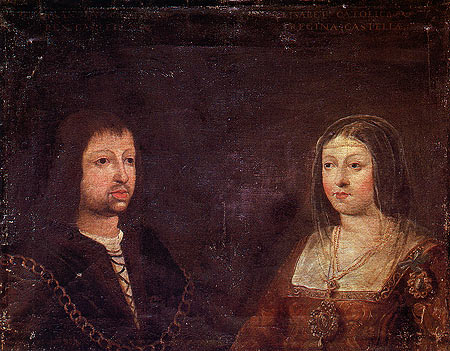
Fernando e Isabel
Wikimedia Commons, Public domain — Unidentified painter

Painting of Isabella the Catholic at the University of Notre Dame, a Catholic research university located in Notre Dame, an unincorporated community north of the city of South Bend, in St. Joseph LCCN
Wikimedia Commons, Public domain — Carol M. Highsmith

Segovia 070
Wikimedia Commons, Public domain — JoJan
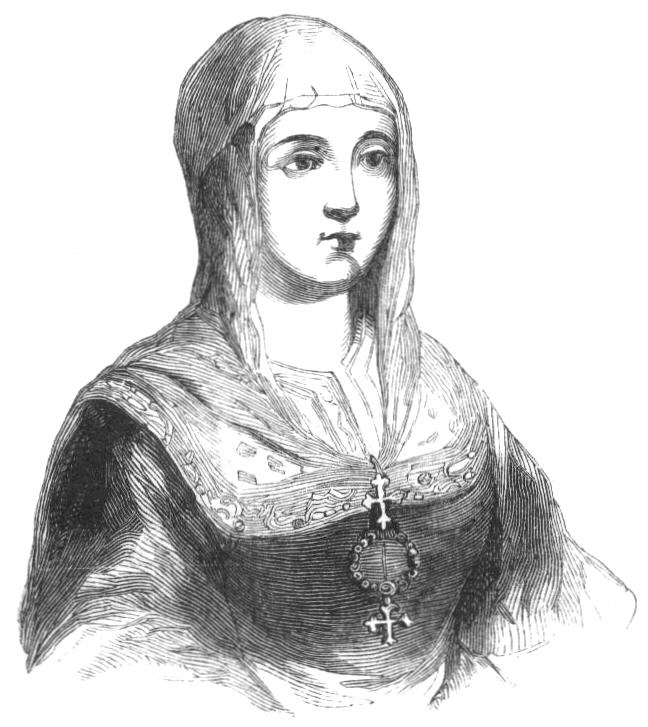
IsabellaofCastile02
Wikimedia Commons, Public domain — Inconnu

Gonzalo Fernández de Córdoba, el Gran Capitán
Wikimedia Commons, CC0 — Ricardo Bellver

Isabelle Ire de Castille. - José Planes (2)
Wikimedia Commons, CC BY-SA 4.0 — Guerinf

Busto de Isabel La Catolica - Iglesia del Sacramento - Calle del Sacramento 11 - Madrid 01
Wikimedia Commons, CC BY-SA 4.0 — Javier Perez Montes
Liens externes & ressources
Références
Œuvres
Fondation de l'Inquisition espagnole
1478
Capitulations de Santa Fe — financement du voyage de Colomb
1492
Achèvement de la Reconquista — Prise de Grenade
1492
Ordonnances de Tolède — Réforme administrative
1480
Patronage des Lettres et de l'Université d'Alcalá
1499
Traité de Tordesillas
1494